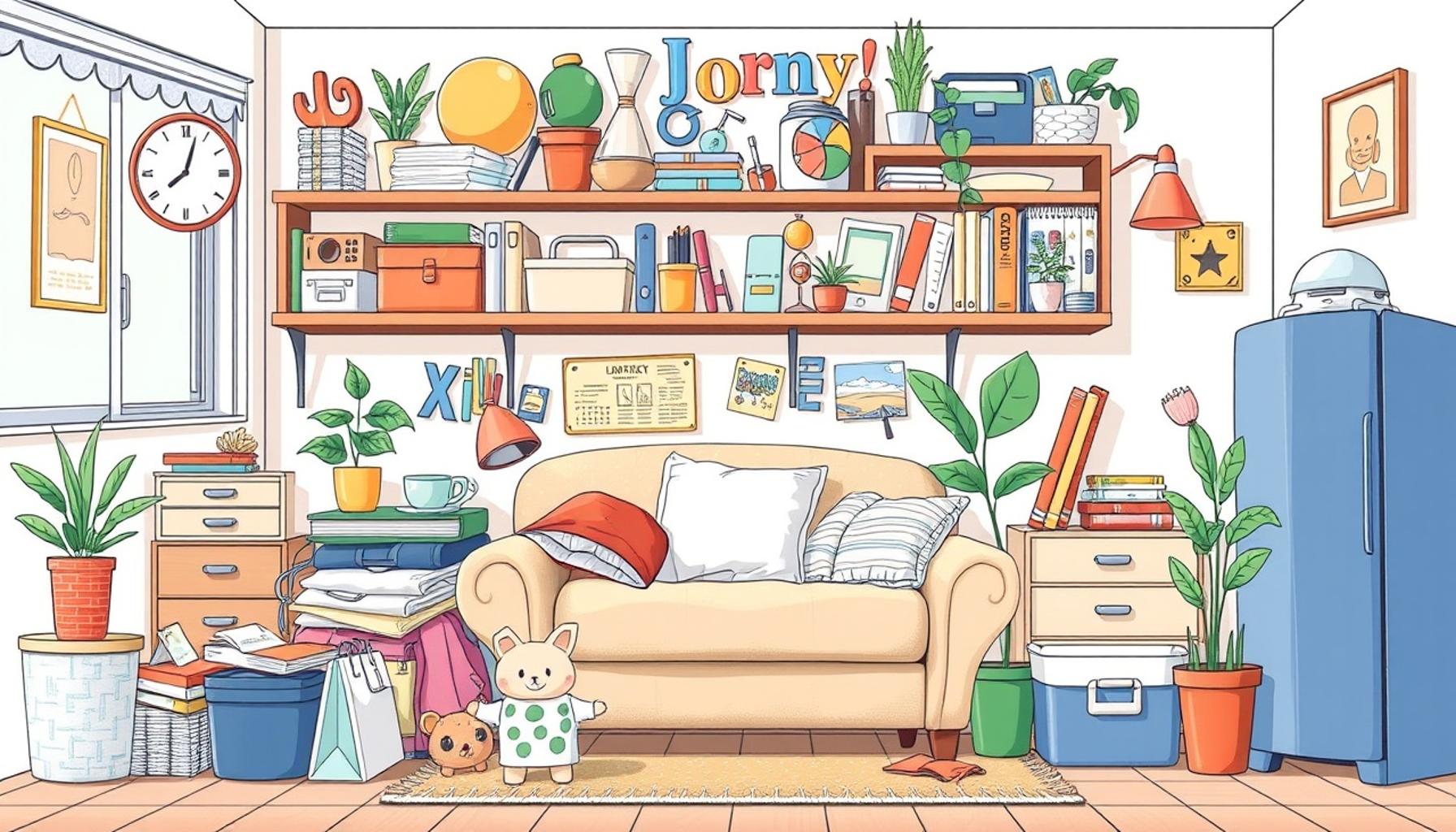
How Reducing Clutter Can Improve Your Mental Health

Understanding the Impact of Clutter
In today’s fast-paced world, clutter has become a common barrier to mental clarity and emotional well-being. Studies show that living in a cluttered environment can lead to feelings of overwhelm, anxiety, and even depression. The relationship between our surroundings and our mental state is undeniable. Research conducted by the UCLA Center on Everyday Lives and Families found that people with more clutter in their homes tend to be more stressed and fatigued, reinforcing the idea that our environment significantly influences our mood and cognition.
Why Decluttering Matters
Reducing clutter can foster a more serene and productive environment. Here are a few ways in which decluttering can enhance your mental health:
- Increased Focus: A tidy space allows for fewer distractions, leading to improved concentration. For instance, consider a student studying at a cluttered desk versus one with just the necessary materials laid out. The latter is likely to absorb information faster and with better retention.
- Decreased Stress: Organizing your environment can significantly lower anxiety levels. Research indicates that individuals who engage in regular decluttering report feeling less fatigued and more in control of their lives. This control is vital for maintaining mental wellness.
- Enhanced Creativity: A clear space can stimulate creative thoughts and fresh ideas. Think about artistic professionals; many find that a clean studio often leads to more innovative projects as it allows the mind to wander freely without the confines of unnecessary distractions.
The Psychological Benefits
Beyond just creating aesthetically pleasing spaces, minimalism and organization offer profound psychological benefits. Individuals often report feeling:
- Empowered: Achieving order can boost your confidence and self-esteem. When people tackle their clutter, they commonly experience a sense of accomplishment that translates to other areas of their lives, creating a positive feedback loop.
- Relaxed: A calm environment can lead to reduced tension and enhanced peace of mind. This is particularly relevant in the United States, where work-life balance can be challenging to maintain. A serene home environment acts as a sanctuary from external stressors.
As we delve deeper into the world of decluttering, it becomes evident that simplifying our surroundings plays a crucial role in improving mental health. The process of decluttering isn’t just about getting rid of things; it’s about creating an atmosphere that supports our mental wellbeing. Join us as we explore actionable strategies to reclaim your space and, in turn, your peace of mind. Techniques such as the KonMari method or the 30-Day Minimalism Game are gaining traction for their effectiveness. Whether you choose to start small or tackle larger projects, the journey of decluttering promises valuable mental health dividends.
The Ripple Effect of Decluttering on Mental Clarity
When we think of clutter, we often envision physical items strewn across our living spaces. However, clutter extends beyond tangible objects; it can also manifest as digital distractions, mental load from unfulfilled tasks, and even emotional baggage stemming from past experiences. This overwhelming presence of clutter can cloud our mental clarity, diminishing our ability to think clearly and make sound decisions. Understanding how reducing clutter enhances mental health requires a closer look at the various dimensions of clutter and its ramifications.
How Clutter Affects Our Minds
The effect of clutter on mental health is not just anecdotal; it is rooted in psychology. Studies have shown that individuals who live in cluttered environments often report higher levels of stress and lower overall life satisfaction. Clutter can serve as a constant visual reminder of tasks left undone, leading to feelings of guilt and inadequacy.
- Overstimulation: Clutter creates sensory overload, which can lead to mental fatigue. For instance, walking into an overly crowded room can provoke anxiety, making it difficult to focus on any single task.
- Decision Fatigue: In a disorganized space, even simple decisions can feel burdensome. Each item vying for attention can distract us from our priorities, making it challenging to discern what truly matters.
- Impaired Sleep Quality: Clutter in the bedroom can negatively impact sleep, as it contributes to a restless atmosphere, which may inhibit relaxation and rejuvenation.
Decluttering as a Therapeutic Practice
Engaging in decluttering can be therapeutic, often reminding individuals to practice mindfulness and gratitude throughout the process. As stuff is sorted and stored, there’s a unique opportunity to reflect on each item’s significance. This interaction with belongings fosters a deeper understanding of what we genuinely value, thereby influencing our emotional well-being.
- Mindfulness Boost: The act of decluttering can encourage mindfulness. It allows us to be present in the moment, focusing on one task at a time. This mental engagement can serve as a form of meditation, leading to reduced stress levels.
- Emotion Regulation: The decisions made while decluttering evoke emotional responses. People often feel liberated as they release items of no significance, paving a path for healthier emotional regulation.
Furthermore, decluttering does not have to be an all-or-nothing endeavor. Initiating this process can start with small, manageable steps that yield tangible benefits. Whether you aim to clear out a closet or tidy up a workspace, each accomplishment can help build momentum, encouraging a more profound transformation of your mental health. As we delve further into actionable strategies to minimize clutter, discover how such movements not only lead to physical space but also facilitate a more fulfilling life in terms of mental wellness.
| Category | Details |
|---|---|
| Mental Clarity | Reducing clutter leads to improved focus and mental clarity, allowing for better decision-making and productivity. |
| Stress Reduction | A tidy environment significantly lowers stress levels by eliminating visual distractions and creating a calming atmosphere. |
| Enhanced Creativity | With less clutter, there’s space for new ideas to flourish, enhancing your creative process. |
| Emotional Well-being | A clean, organized space can evoke positive emotions, contributing to overall mental well-being and happiness. |
Eliminating clutter from your surroundings can lead to profound changes in mental health. This practice not only promotes focus and productivity but also significantly reduces stress, making daily tasks feel less overwhelming. A more organized space allows you to tap into your creative potential, fostering a sense of accomplishment and satisfaction that can elevate your mood.Additionally, the emotional benefits of a tidy environment cannot be overstated. A clean space is associated with enhanced feelings of control, empowerment, and tranquility. As a result, taking steps towards decluttering can transform your perspective on life, opening doors to new opportunities and insights. Embrace the journey towards a clutter-free environment and witness how it can positively shape your mental health.
The Empowering Benefits of a Clutter-Free Environment
In the pursuit of mental wellness, the environment we inhabit plays a crucial role. A clutter-free space not only enhances aesthetic appeal but also serves as a foundation for improved mental health. By tackling clutter, individuals can experience a myriad of benefits that extend beyond visual clarity, paving the way for a healthier mindset.
The Connection Between Clutter and Stress Relief
Reducing clutter is often equated with the notion of simplicity and order, and for good reason. Studies indicate that a clean environment contributes significantly to lower stress levels. A survey conducted by the National Sleep Foundation reveals that over 30% of individuals reported sleep hesitations due to cluttered living spaces. This statistic underscores how physical disorder can seep into our psychological well-being, disrupting not only our daily functioning but also our long-term mental stability.
- Decreased Anxiety Levels: A study published in the journal Environment and Behavior found that individuals in uncluttered spaces experienced reduced cognitive overload and anxiety. Clean and organized surroundings allow the mind to focus on what truly matters, helping individuals to breathe easier.
- Increased Productivity: Clutter can divert attention and diminish efficiency. The American Psychological Association highlights that individuals in organized workspaces are 26% more productive compared to those surrounded by disarray. In this fast-paced society, improving productivity can greatly enhance feelings of accomplishment, ultimately fostering a sense of well-being.
Cultivating a Sense of Control
One of the most profound impacts of decluttering is the sense of control it cultivates. In moments of uncertainty and chaos, taking charge of one’s immediate environment can generate feelings of empowerment. The act of decluttering requires decision-making skills, and every item that is organized, donated, or discarded can be seen as a small victory.
- Enhancing Self-Esteem: Successfully undertaking a decluttering project can significantly boost self-esteem. As individuals engage in sorting through their belongings, they can reflect on their values and choices, reinforcing a positive self-image.
- Creating Personal Spaces of Sanctuary: A decluttered home transforms into a personal sanctuary, free from distractions and filled with items that genuinely bring joy. The Japanese art of ‘Komono’ encourages individuals to redesign their spaces around what sparks joy, contributing to a more uplifting and mental health-friendly environment.
Unlocking Creativity Through Clarity
A clear space often leads to a clear mind. When the clutter dissipates, creativity has room to flourish. Spaces that are organized and decluttered can ignite new ideas and foster innovative thinking. A 2020 study from the University of Illinois found that individuals in neat environments performed almost 40% better on creative tasks than those in cluttered conditions.
Furthermore, by decluttering, individuals not only minimize distractions but also free up cognitive resources, allowing for greater creative expression. This benefit is particularly valuable for those in fields that require constant innovation and ideation.
In essence, reducing clutter holds the potential to unlock a multitude of benefits that contribute substantially to enhancing mental health. The freedom from physical and mental clutter can lead to a more fulfilling and vibrant life, marking the start of a journey toward self-discovery and emotional resilience.
Embracing a Clutter-Free Life for Mental Wellness
As we’ve explored, the act of reducing clutter is more than just a physical endeavor; it is a transformative journey that significantly enhances mental health. By creating a simplified and organized environment, individuals can experience reduced stress levels, increased productivity, and a stronger sense of control—elements that are crucial for thriving in today’s fast-paced world. The overwhelming nature of clutter often serves as a constant reminder of unfinished tasks and lingering anxiety, thereby interfering with our ability to remain present and focused.
Moreover, the emotional and psychological benefits of decluttering extend far beyond initial relief. As personal spaces evolve into true sanctuaries filled only with cherished items, individuals often find new levels of creativity and inspiration that were previously stifled by disarray. This rejuvenation not only fosters a sense of self-empowerment but also engenders a deeper understanding of personal priorities and aspirations.
In conclusion, embarking on the path of decluttering is an essential step towards achieving optimal mental health. By taking control of our surroundings, we can cultivate a more peaceful and productive mindset, unlocking the potential for a fulfilling and purposeful life. To those seeking enhanced well-being, it’s time to take decisive action. Consider starting small—whether it’s a single drawer or a room—and witness the profound impact this positive change has on your mental landscape. A clutter-free existence is, ultimately, a pathway to clarity, peace, and emotional resilience.

Linda Carter is a writer and organization expert specializing in minimalism and personal organization. With extensive experience helping individuals create clutter-free, functional spaces and adopt mindful habits, Linda shares her knowledge on our platform. Her goal is to empower readers with practical advice and strategies to simplify their lives, stay organized, and achieve a sense of calm and balance in their daily routines.